
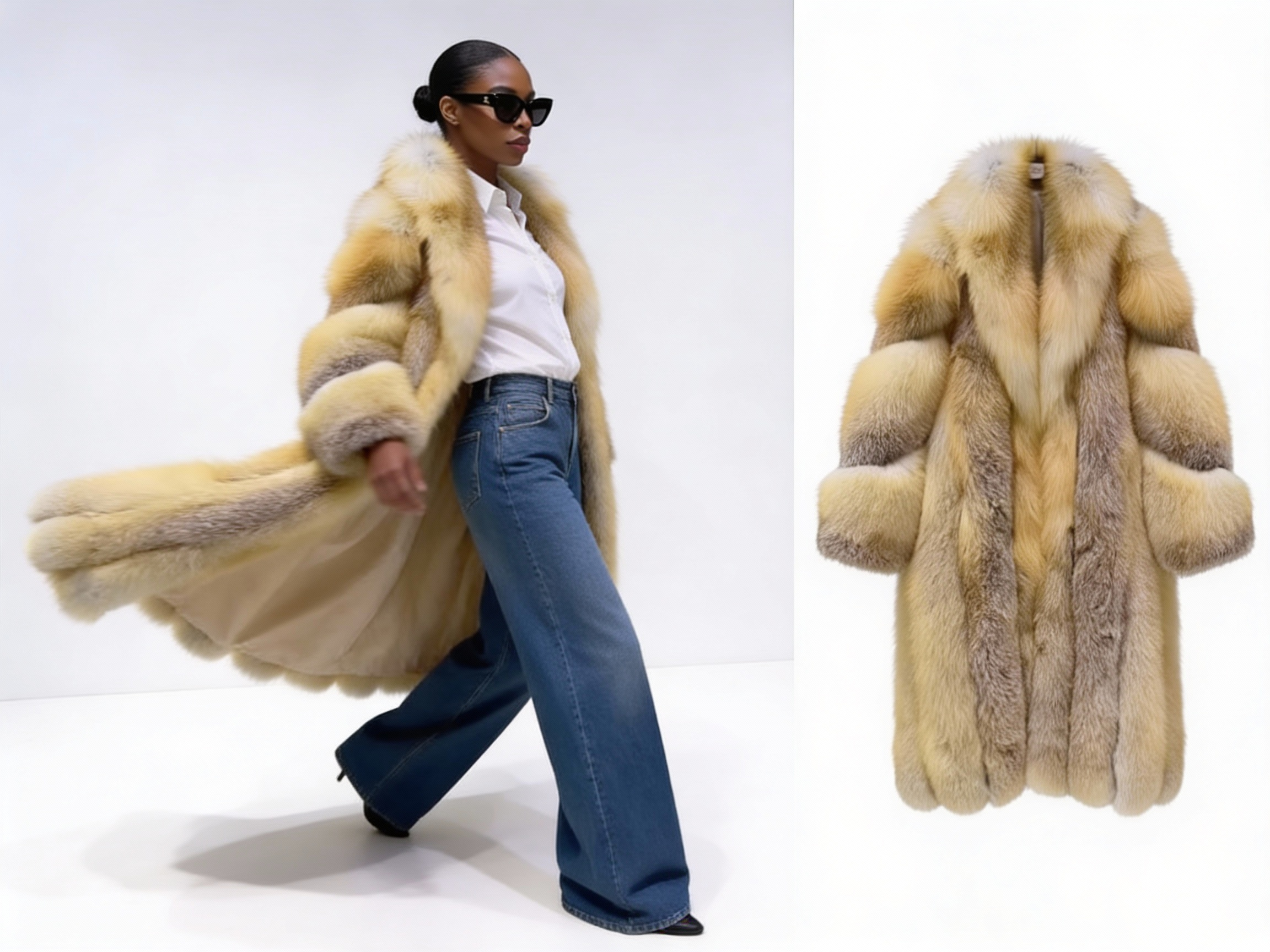
FUR CARE INSTRUCTIONS
General Handling
Avoid crushing or folding fur. Store garments on broad, padded hangers to maintain shape.
Keep furs away from direct heat sources (radiators, fireplaces) and prolonged sunlight to prevent drying and color fading.
Never sit for long periods while wearing heavy fur garments; remove them to avoid flattening the fur and stressing seams.
Avoid applying perfume, hairspray, or body oils directly onto fur; allow any scented products to dry before dressing.
Cleaning & Maintenance
Do not machine wash, dry clean, or bleach fur. These processes can damage pelts, dyes, and leather skins.
For light surface dirt, gently shake the garment outdoors and use a soft-bristled brush or your fingertips to lift debris along the direction of the hair.
For stains or significant soiling, take the piece to a professional furrier or a specialist in fur cleaning. Insist on fur-specific cleaning; general dry cleaners may harm the leather.
Have fur professionally cleaned at least once every 12–24 months, depending on wear frequency and local climate.
Storage
Store furs in a cool, well-ventilated environment away from heat and humidity.
Use a breathable garment bag (cotton or linen). Avoid plastic bags, which trap moisture and promote mildew and leather drying.
In warm or humid climates, consider professional cold storage during off-seasons to preserve oils and shape. Professional storage should provide temperature- and humidity-controlled environments.
Allow the fur to air out after wearing before returning it to storage to dissipate moisture from body heat.
Humidity & Temperature
Ideal storage conditions are cool temperatures and moderate humidity (around 45–55%) to keep pelts supple.
Avoid excessively dry environments that can cause leather to crack and excessive humidity that encourages mold.
Protection from Pests & Odors
Protect against moths and insects with cedar blocks or natural repellents placed near (but not touching) the garment; do not use mothballs directly with fur.
If the fur absorbs odors (smoke, food), air it outdoors on a dry, breezy day away from direct sun. Persistent odors require professional treatment.
Repairs & Alterations
Have any seam, lining, or hardware damage repaired promptly by a qualified furrier to prevent further damage.
Never attempt to alter or reline fur at a standard tailor without confirming their experience with fur garments.
Water Exposure
If fur gets wet from rain or snow, shake off excess water, smooth the hairs with your hand, and hang the garment to dry naturally in a well-ventilated area away from heat. Do not blow-dry.
For heavily soaked furs, take the garment to a professional furrier for proper restoration.
Daily Care Tips
Rotate fur garments in your wardrobe to avoid overuse of a single piece.
Keep makeup, lotions, and jewelry from directly contacting interior linings to prevent stains and wear.
Zip or button up closures gently to reduce stress on seams and closures.
Travel & Transport
When traveling, use roomy, breathable garment bags and avoid tightly packing with other items that can crush the fur.
For long-distance moves, consult a furrier about professional transport or storage options.
Professional Consultation
Establish a relationship with a reputable furrier for regular maintenance, storage, cleaning, and repairs.
Ask for documentation of cleaning methods and storage conditions when using professional services.
Preservation
For long-term preservation or archival needs, consult a fur specialist for recommended conservation techniques and controlled storage solutions.
If you need care instructions tailored to a specific Juxtamod piece (type of fur, lining, or construction), provide the item details and we will give customized guidance.